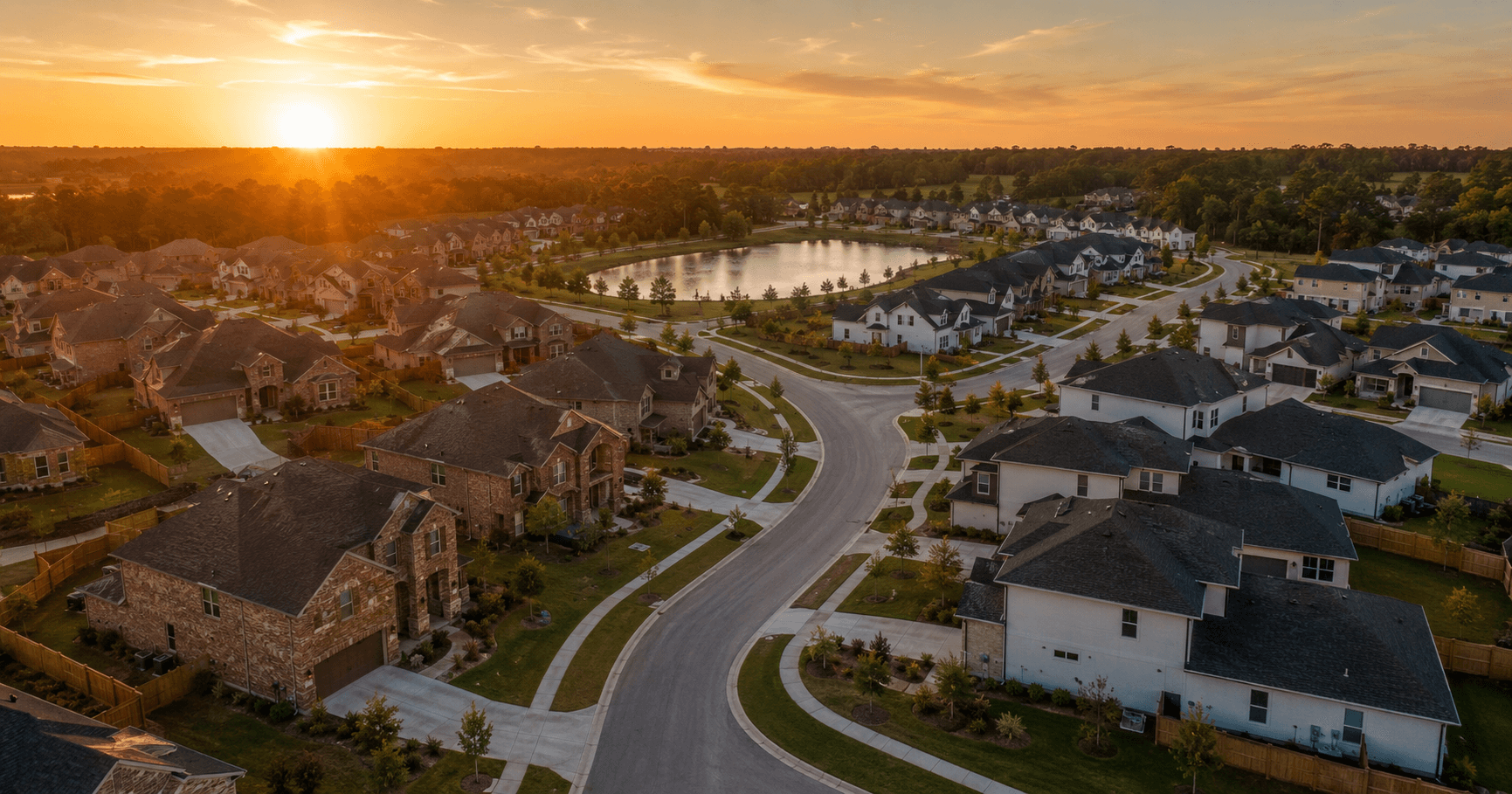

In the same week, we've tracked Toll Brothers cutting $51,000 off a home at Woodson's Reserve while, a few miles away, DRB Homes held its price at Mostyn Springs and instead offered $50,000 in flex cash toward closing costs and upgrades. Same market, same general price pressure, two completely different responses. That's not random - each builder is solving a different problem, and knowing which one you're dealing with changes how you should negotiate.
Price Cuts: What They Actually Signal
A direct price reduction shows up as a lower listed price on a specific spec home - the kind of drop we track weekly, like Toll Brothers dropping a home at Woodson's Reserve from $820,000 to $769,000, or Perry Homes cutting a Grand Central Park spec home from $471,900 to $424,900. These are almost always tied to a specific finished or nearly-finished home the builder needs off its books - carrying costs on a completed spec home add up every month it sits unsold, and at some point cutting the price outright is cheaper for the builder than continuing to carry it.
The tradeoff for the builder: a price cut is public and permanent. It resets the comp for that community, which can pressure the builder's pricing on the next phase, and it's visible to every buyer who already closed nearby at the higher price. Builders use direct price cuts more readily on spec homes further from the model park, or late in a quarter when moving inventory matters more than protecting the community's price ceiling.
Incentives: Solving the Same Problem Without Touching the Price
An incentive - closing cost assistance, a rate buydown, or a design center credit - gets the buyer to the same effective monthly payment without changing the home's official price. DRB Homes' up to $50,000 in Flex Cash at both Mostyn Springs and Grand Magnolia, Highland Homes' $10,000 plus $3,000 in closing cost assistance at Woodforest, and Highland Homes' up to $100,000 toward customization at Emory Glen are all the same underlying move: protect the headline price while still making the deal work for the buyer.
Builders lean on incentives instead of price cuts when they're earlier in a community's life cycle and want to protect pricing for future phases, or when the incentive can be funded through the builder's in-house lender - which is often cheaper for the builder than it looks, since a rate buydown costs the builder a lump sum today but the buyer feels it as a lower payment for years.
Financing Incentives: A Third Lever
J. Patrick Homes' $20,000 financing incentive at Artavia is a good example of a builder using the mortgage rate itself as the lever rather than price or closing costs. On a $500,000 loan, a meaningful rate buydown can be worth more to a buyer's monthly payment than an equivalent price cut - which is exactly why it's worth asking any builder offering an incentive to show you the math both ways: what does this home cost with the incentive applied to rate versus applied as a straight price reduction? The numbers are not always equivalent, and builders don't always volunteer the comparison.
Why the Same Company Does Both
Westin Homes ran up to $75,000 in incentives at Colton and Kresston in the same week Perry Homes was cutting prices outright at Colton and Grand Central Park - two different builders in the same community, making two different calls based on their own inventory position, not the community's overall market conditions. This is why "how's the market doing" is the wrong question to ask a builder's sales office. The right question is about that specific builder's current inventory pressure in that specific community.
Inventory Pressure: The Signal Behind Both
Both price cuts and incentives are downstream of the same thing: how many finished or nearly-finished homes a builder is currently carrying in a community, and how close the builder is to a monthly or quarterly sales target. We track this directly - inventory movement by community tends to predict which builders will move on price or incentives before it's publicly advertised, since builders typically adjust internally before updating the sign out front.
How to Negotiate the Best Deal Either Way
When you're comparing a price cut against an incentive on two different homes, run both totals through the same lens: total cash needed at closing, and total monthly payment including principal, interest, taxes, and HOA. A $20,000 price cut and a $20,000 closing cost credit are not the same deal once financing is factored in - the price cut lowers your loan amount and your monthly payment permanently, while a closing cost credit lowers your cash-to-close but not your note. Neither is automatically better; it depends on whether you're more constrained by your down payment or your monthly budget.
The National Association of Home Builders tracks builder incentive usage nationally and consistently finds that incentives outpace straight price cuts industry-wide when mortgage rates are the primary affordability constraint - which lines up with what we see locally in Magnolia and Montgomery right now.
The Practical Takeaway
Don't assume the builder offering the bigger-sounding incentive is giving you the better deal, and don't assume the builder cutting price is more desperate than the one holding steady with a rate buydown. Ask for the same three numbers from every builder you're comparing: total cash to close, total monthly payment, and how firm that number is. We track price drops and incentive activity across every builder in every community weekly, specifically so you can compare these apples to apples instead of guessing from the sign out front.
Get this week's price drops and incentives compared side by side - subscribe to free deal alerts for any community you're considering.
Michael Krynski is a Keller Williams The Woodlands & Magnolia agent specializing in North Houston new construction. Book a free 15-minute call and I'll run the real numbers on any price-cut vs. incentive comparison you're weighing.
Michael Krynski
Keller Williams The Woodlands & Magnolia agent specializing in North Houston new construction. Helps buyers navigate builder contracts, incentives, and community selection across Magnolia, Conroe, The Woodlands, and Montgomery.